Friday, June 21, 2013

Task Five: Reflection on course and own learning


Learning a lot from the course, I have been working in childcare on and off for 10 years but there is always room to improve and learn.  I enjoy learning new things and getting more information about being a teacher.


Things I'm finding interesting is Te Reo, I find it very hard to get my head about Maori words but I'm trying my best at getting the words right and putting them into practice.  Also enjoying the whole home centre 12 hours a week in a centre as this is giving me more skills that I will need for my practicum and when I get a job in the field.

Things I need to further development on is my Te Reo, I will get better in this as the staff at my home centre say a lot in Maori so I will pick it up with listening and making sure I ask if I have the words correct before saying it to the children.

My Philosophy of teaching.

I believe children learn by watching others and by doing it themselves.  Giving them skills to help them develop and increase their skill level is essential and they will use those skills in their own time, for example walking, climbing or jumping they wont all do it at the same time, they all have different ages they will start and complete a milestone in their life.

I also believe that adults are a support system to the child while they learn about the world in their own time, no point in pushing a child that isn't ready to do something as that can cause stress and upset the child and frustration for the adult.


As I get further into my course and learning I will be able to adapt my philosophy.


Task Three: Students facilitation of one learning experience.


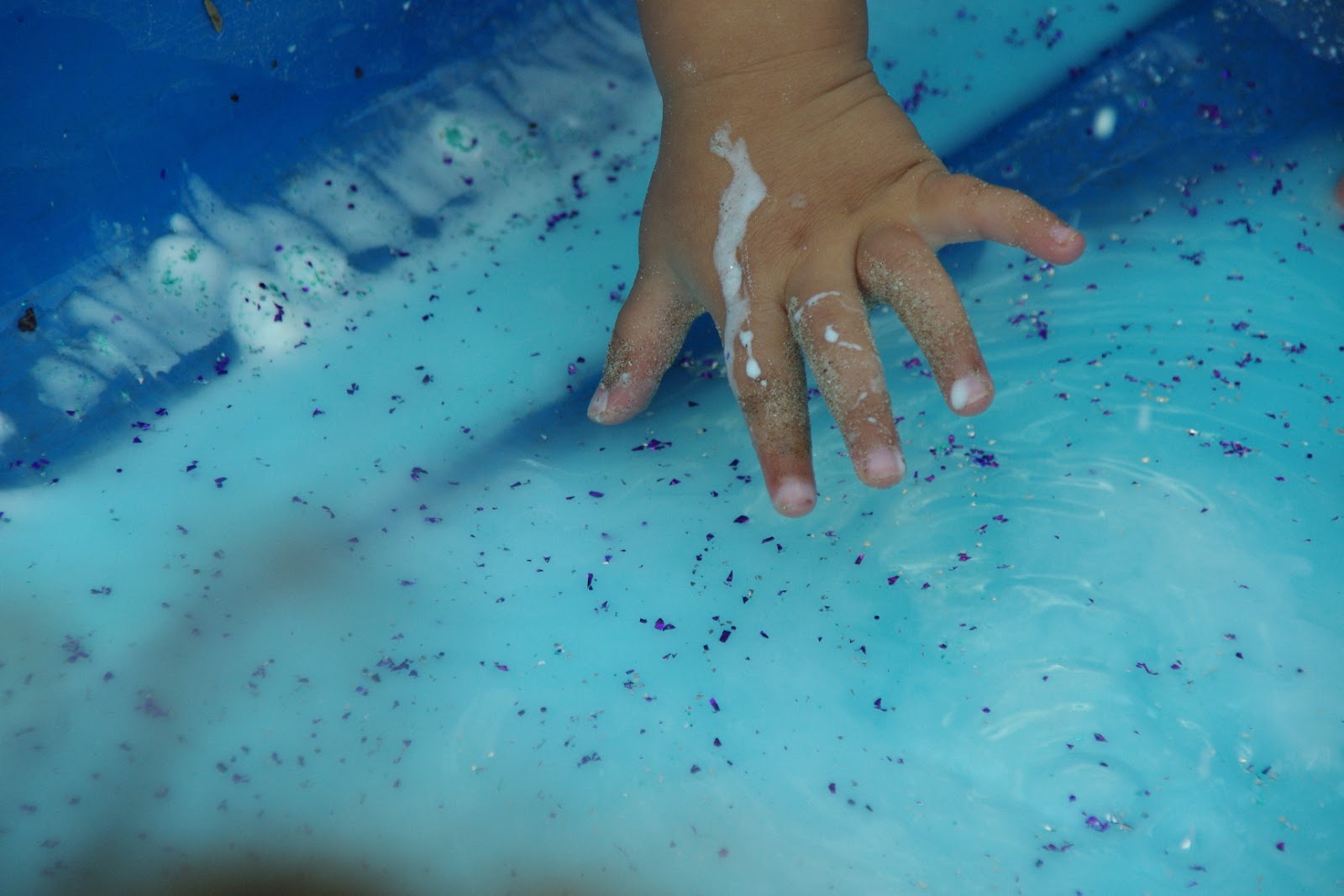
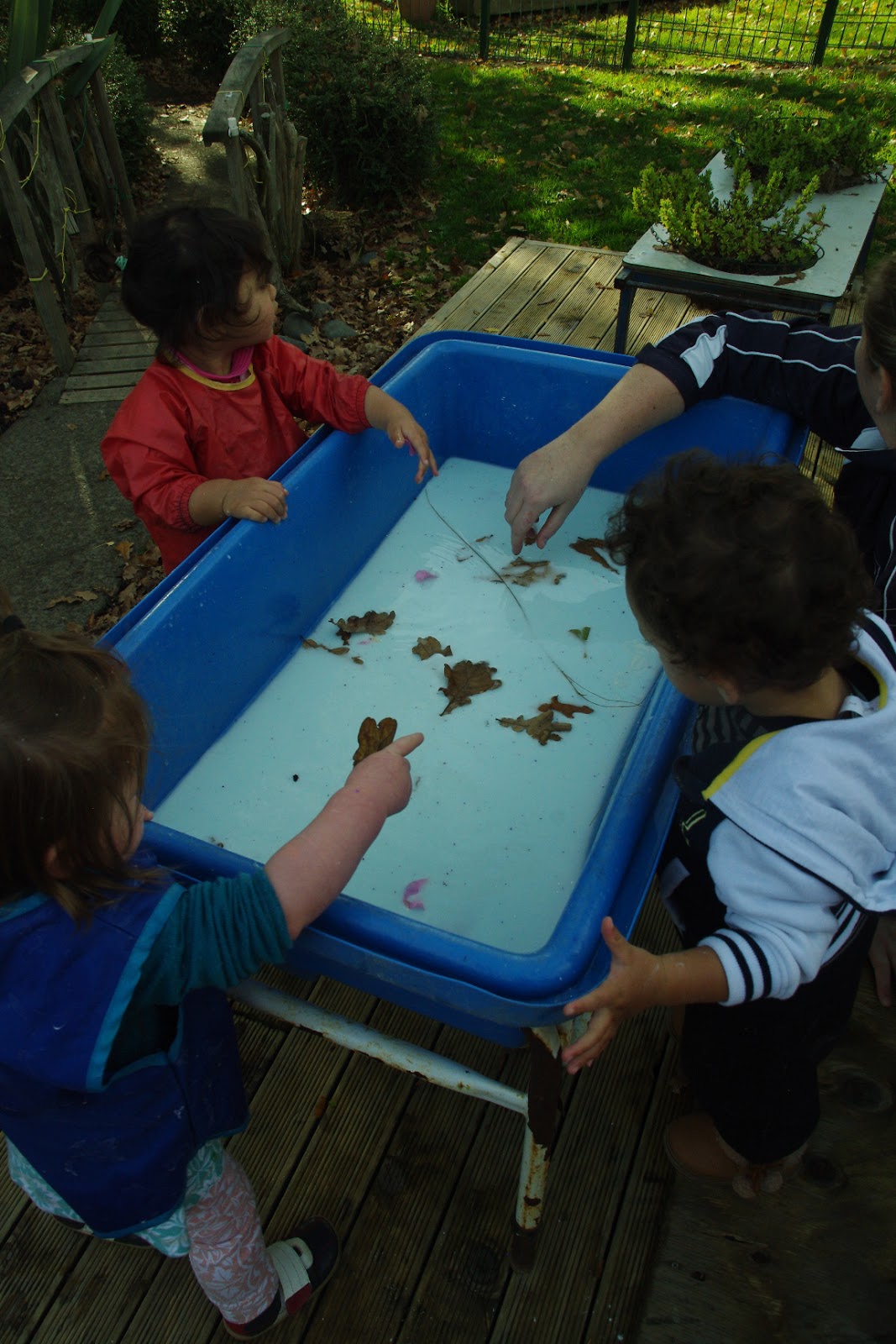
I set up cornflour and water to make slime, added glitter and blue water into a tub outside for the toddlers to have a play in after they had afternoon tea.  The children can learn about water and cornflour making something else, something hard to pick up but will run and fall though the fingers.


The children had lots of fun splashing in the water and pulling the slime off the bottom of the tub or a teacher putting the slime into their hands.  I went with the children's interest one they were out there and after they were splashing in the tub and moving everything around and with more water being added, making the water a milky white, they started adding leaves to play with in the tub.  This empowers the children to facilitate their own learning to learn and grow with the materials around them (Ministry of Education, 1996)


The interacting with the children in this space was fun and enjoyable, they seemed to have lots of fun, laughing and screaming with the items they were playing with, they seemed to enjoy taking over the activity and making it their own by adding things they wanted in there, such as the leaves.  I sat along side them talking to them about what they were doing and playing in the water, milky, leaf water with them, picking up slime and leaves and dropping them.  Some of the children would put their hands under my hand to catch and then drop them again.


"Within minutes, a child can be both dependent and independent, according to changes in temperament, environment, or adult expectations" 
(Ministry of Education, 1996, p. 21).

To ensure the children were safe around the water I had it off the ground so their hands could get into the tub but they couldn't fall into the tub of water, I used hot water before the children came outside so it was warm when they came out and not too hot for their hands.  When adding more warm water I made sure it was out of the hot tap which is a good temp for the children and by the time it got outside it had cooled down a little more making it safe for the children to put their hands into, testing this with my wrist.

What I think worked was the children love water play and they played in it when more warm water was added as they didn't seem to like it cold.  Next time I will add more cornflour as once we added more water the cornflour dissolved, but this also gave the water a neat milky colour.  I liked that the children could make it their own by adding things they wanted in it like leaves. 


Reference:
Ministry of Education. (1996). Te Whāriki: He whāriki matauranga mō ngā mokopuna o Aotearoa: Early childhood curriculum. Wellington, New Zealand: Learning Media.

Wednesday, June 19, 2013

One learning space in the centre


In this area there is normally at least one staff member or student sitting on the edge or in the sandpit with the children, making sure all children are safe.  For the climbing its down in the sandpit with a soft landing if they chose to jump off or lose their footing, staff are there to ensure they are careful but also letting them learn their own safety aspects within reason.  Like letting them jump off the box into the sand, gives the child the power for their own learning, someone is there if the child needs to hold a hand to help them.

There is a shed with all the digging toys, buckets, spades, trucks, sand wheels, and more.  The children have access to this when its open to get out what they would like to use with what has been put out.


Each day there is a different set up and the toddlers can ask for something else to come out or move things around, such as climbing boxes with planks that come off the boxes.  One child decided to move a plank (with help) off a blue step up to the sand so it made a slide.  The children love climbing in the sand pit.


Another day, this was asked by a child if we could put up the wood, the child was confidence to ask for materials to build what he had in mind.  The child knew what he wanted and where he wanted the items to go. (Ministry of Education, 1996)


There is so much learning going on in this play area, including digging and putting sand into buckets, onto walls, on hands and just picking it up to drop. Teachers sit with the children building, digging as this encourages the children to get involved by knocking down castles or adding extra sand to the top of the castles that are made by the teachers, as the children seem to enjoy this getting done "children experience an environment where their play is valued as meaningful learning and the importance of spontaneous play is recognised" (Ministry or education, 1996, p. 84).

Another thing in this area are swings, there are hook at the top for a couple of swings to be attached, children will often point to the hooks asking for the swings and going to the shed where they are stored.  By letting the child decide and the teacher to help them get what they are asking for gives "the confidence and ability to express their ideas and to assist others" (Ministry of Education, 1996).

Reference:
Ministry of Education. (1996). Te Whāriki: He whāriki matauranga mō ngā mokopuna o Aotearoa: Early childhood curriculum. Wellington, New Zealand: Learning Media.

Falling Leaves


Thursday, June 13, 2013

Task four: Response to feedback


The feedback was really good, she liked my interactions with the children and trying the Te Reo phases.  She likes how I supported the children in the things they wanted to do, like washing their own face after morning tea.  

My visiting lecture I noticed looked over at a child crying and i quickly explained to her about the child and how she was new and only went to certain people so we stand back while she adjusts and sticks with the adult she is wanting.  My lecture liked me explaining this to her so she knew I wasn't just ignoring the child i was following what the staff and students were all doing and letting the child decide for herself.

I felt really good at the end of my meeting and went away to read my comments again and it put a smile on my face.

I have learnt a lot from my feedback, I have learnt more phases in Te Reo from Angela my visiting lecture that I can use in every day practice on things we use all the time.  I was happy to get these new phases to try out and the staff members were happy about this too as they can use these new phases as well.

I have responded to the feedback by talking with the staff about making up a resource board with more Te Reo phases to put up and around the room to share with the staff members and other students that come into the infants and toddlers room.  With this we are all learning new words and teaching the children at the same time.

I have responded this way cause i was pleased with everything else and the thing I did struggle with was the Te Reo as its a second language for me and I struggle with English at some point.